Tag Archives: OpenId connect
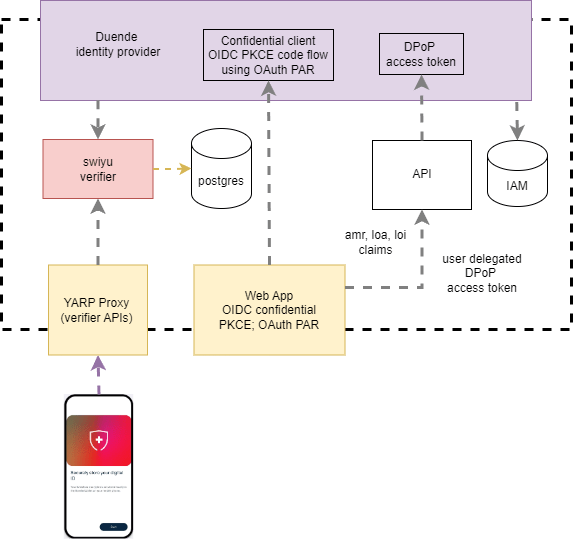
Add application security to the swiyu generic management verifier APIs using OAuth
The article looks at implementing security using OAuth for the swiyu Public Beta Trust Infrastructure generic containers. The container provides endpoint for OpenID verification and the management APIs. The OpenID endpoints are publicly accessible using a reverse proxy, the management APIs can only be accessed in the network and using an access token for app […]
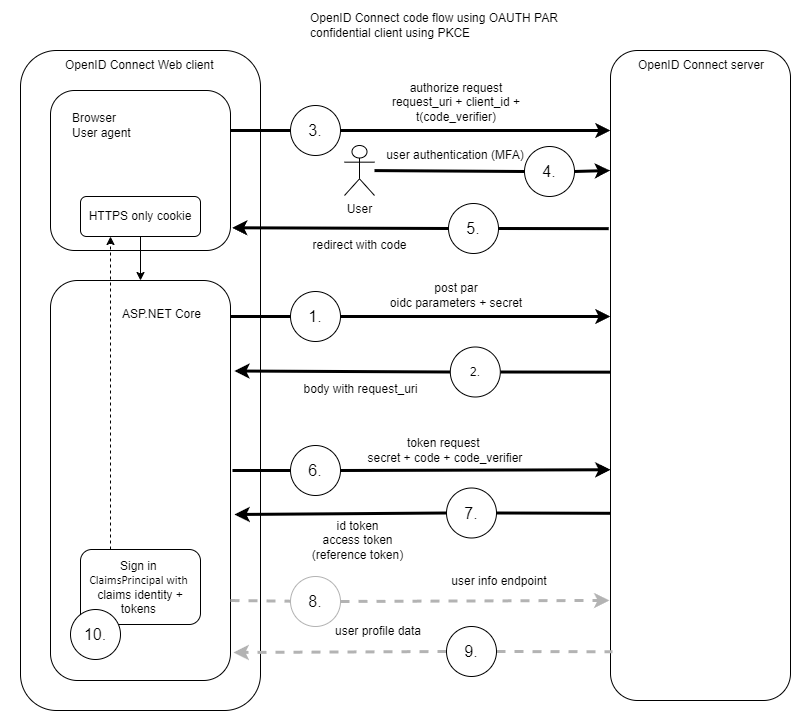
Use client assertions in ASP.NET Core using OpenID Connect, OAuth DPoP and OAuth PAR
This post looks at implement client assertions in an ASP.NET Core application OpenID Connect client using OAuth Demonstrating Proof of Possession (DPoP) and OAuth Pushed Authorization Requests (PAR). Code: https://github.com/swiss-ssi-group/swiyu-passkeys-idp-loi-loa Blogs in this series: Setup An ASP.NET code application is setup to authentication using OpenID Connect and OAuth PAR. The web application is an OIDC […]
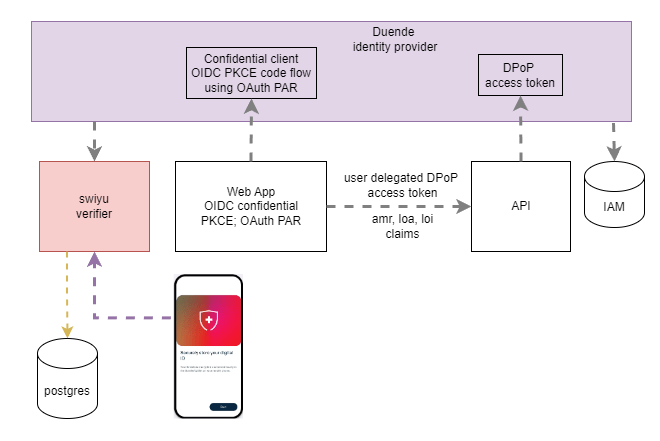
Force step up authentication in web applications
The post shows how to implement a step up authorization using the OAuth 2.0 Step Up Authentication Challenge Protocol RFC 9470. The application uses ASP.NET Core to implement the API, the web application and the identity provider. Duende IdentityServer is used to implement the OpenID Connect server standard and also OAuth DPoP token binding as […]
Implementing Level of Identification (LoI) with ASP.NET Core Identity and Duende
This article explores how to implement Level of Identification (LOI) in an ASP.NET Core application. The solution uses Duende IdentityServer as the OpenID Connect provider and ASP.NET Core Identity for user management. Identity verification is performed using the Swiyu Public Beta infrastructure. Any OpenID Connect client can consume the loi claim together with the loa […]
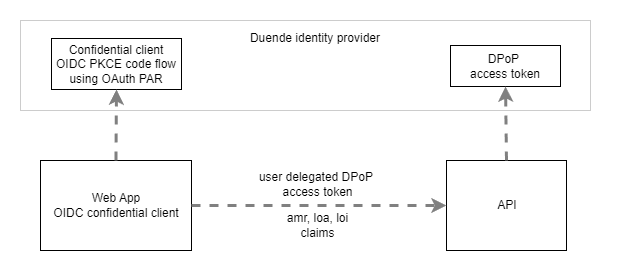
Implementing Level of Authentication (LoA) with ASP.NET Core Identity and Duende
This post shows how to implement an application which requires a user to authenticate using passkeys. The identity provider returns three claims to prove the authentication level (loa), the identity level, (loi) and the amr claim showing the used authentication method. Code: https://github.com/swiss-ssi-group/swiyu-passkeys-idp-loi-loa Blogs in this series: The amr claim and the loa claim returns […]

Implement MFA using swiyu, the Swiss E-ID with Duende IdentityServer, ASP.NET Core Identity and .NET Aspire
The post shows how to use the Swiss Digital identity and trust infrastructure, (swiyu) as an MFA method in an ASP.NET Core web application using ASP.NET Core Identity and Duende IdentityServer. The generic containers from swiyu are used to integrate the Swiss E-ID and the OpenID for Verifiable Presentations standards. Code: https://github.com/swiss-ssi-group/swiyu-idp-mfa-aspire-aspnetcore Blogs in this […]
Use swiyu, the Swiss E-ID to authenticate users with Duende and .NET Aspire
This post shows how to authenticate users using Duende IdentityServer and ASP.NET Core Identity which verifies identities (verifiable digital credentials) using the Swiss Digital identity and trust infrastructure (swiyu). The swiyu infrastructure is implemented using the provided generic containers which implement the OpenID for Verifiable Presentations standards as well as many other standards for implementing […]

Implement a secure MCP OAuth desktop client using OAuth and Entra ID
The article demonstrates how to implement a secure MCP OAuth desktop client using Microsoft Entra ID. The MCP server is built with ASP.NET Core and secured using Microsoft Entra ID. The MCP client is a .NET console application that must acquire an OAuth access token to interact with the MCP server. Code: https://github.com/damienbod/McpSecurity Setup A […]
Use EdDSA signatures to validate tokens in ASP.NET Core using OpenID Connect
Some identity providers use the EdDSA / ED25519 algorithm to sign and issue tokens. This post shows how to validate the tokens using the Nuget package from ScottBrady and ASP.NET Core. Using the default OpenID Connect setup, the keys are not read and the tokens cannot be validated. The error message could return something like […]

Implement ASP.NET Core OpenID Connect with Keycloak to implement Level of Authentication (LoA) requirements
This post looks at implementing an OpenID Connect client in ASP.NET Core and require a level of authentication (LoA) implemented using Keycloak. The applications are hosted using Aspire. The LoA is requested in Keycloak using the acr_values claim. Code: https://github.com/damienbod/IdentityExternalErrorHandling Setup The applications are implemented using Aspire. An ASP.NET Core application uses an OpenID Connect […]

 Software Engineering