Tag Archives: OAuth2
OAuth using OIDC Authentication with PKCE for a .NET Core Console Native Application
This article shows how to use a .NET Core console application securely with an API using the RFC 7636 specification. The app logs into IdentityServer4 using the OIDC authorization code flow with a PKCE (Proof Key for Code Exchange). The app can then use the access token to consume data from a secure API. This […]
ASP.NET Core Authorization for Windows, Local accounts
This article shows how authorization could be implemented for an ASP.NET Core MVC application. The authorization logic is extracted into a separate project, which is required by some certification software requirements. This could also be deployed as a separate service. Code: https://github.com/damienbod/AspNetCoreWindowsAuth Blogs in this series: Supporting both Local and Windows Authentication in ASP.NET Core […]
Supporting both Local and Windows Authentication in ASP.NET Core MVC using IdentityServer4
This article shows how to setup an ASP.NET Core MVC application to support both users who can login in with a local login account, solution specific, or use a windows authentication login. The identity created from the windows authentication could then be allowed to do different tasks, for example administration, or a user from the […]

Sending Direct Messages using SignalR with ASP.NET Core and Angular
This article shows how SignalR could be used to send direct messages between different clients using ASP.NET Core to host the SignalR Hub and Angular to implement the clients. Code: https://github.com/damienbod/AspNetCoreAngularSignalRSecurity Posts in this series History 2023-01-08 Updated Angular 15, .NET 72021-01-25 Updated Angular 11.1.0 .NET 5, ngrx implementation2020-03-21 updated packages, fixed Admin UI STS2019-08-18 […]
IdentityServer4 Localization with the OIDC Implicit Flow
This post shows how to implement localization in IdentityServer4 when using the Implicit Flow with an Angular client. Code: https://github.com/damienbod/AspNet5IdentityServerAngularImplicitFlow The problem When the oidc implicit client calls the endpoint /connect/authorize to authenticate and authorize the client and the identity, the user is redirected to the AccountController login method using the IdentityServer4 package. If the […]
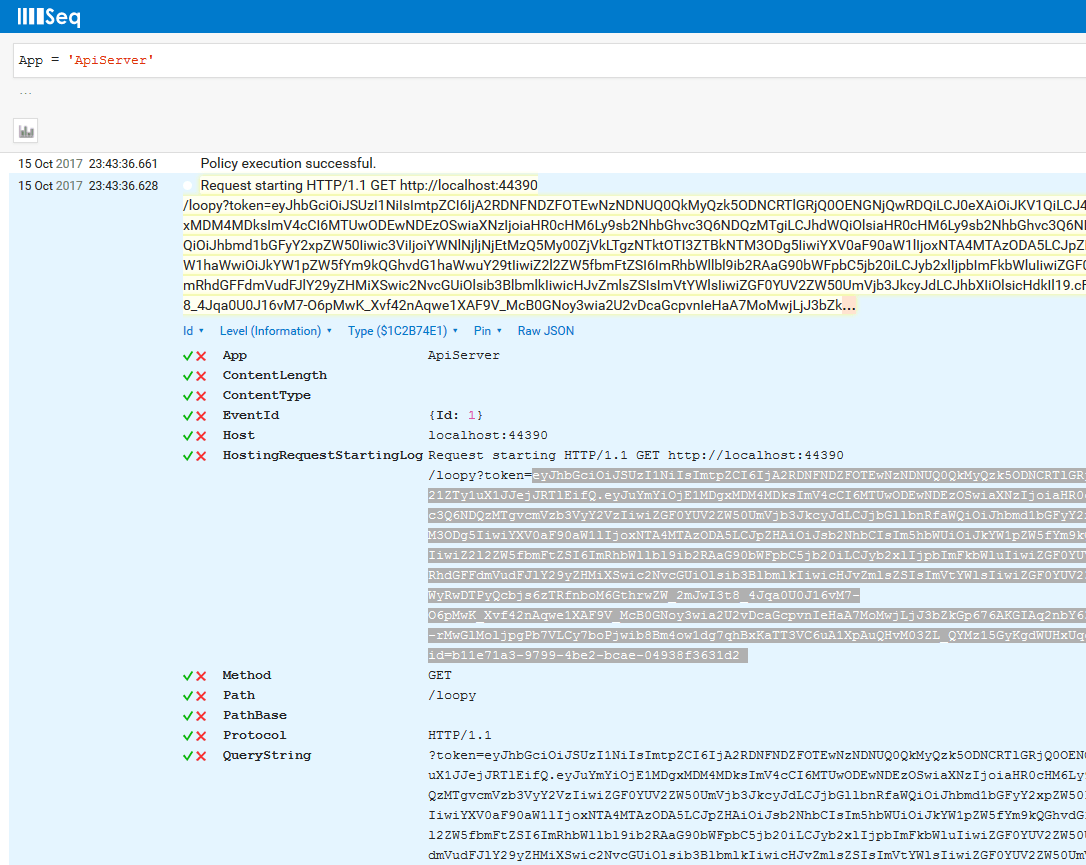
Securing an Angular SignalR client using JWT tokens with ASP.NET Core and Duende IdentityServer
This post shows how an Angular SignalR client can send secure messages using JWT bearer tokens with an API and an STS server. The STS server is implemented using Duende IdentityServer and the API is implemented using ASP.NET Core. Code: https://github.com/damienbod/AspNetCoreAngularSignalRSecurity Posts in this series History 2023-01-08 Updated Angular 15, .NET 72021-01-25 Updated Angular 11.1.0 […]
Auto redirect to an STS server in an Angular app using oidc Implicit Flow
This article shows how to implement an auto redirect in an Angular application, if using the OIDC Implicit Flow with an STS server. When a user opens the application, it is sometimes required that the user is automatically redirected to the login page on the STS server. This can be tricky to implement, as you […]
Adding an external Microsoft login to IdentityServer4
This article shows how to implement a Microsoft Account as an external provider in an IdentityServer4 project using ASP.NET Core Identity with a SQLite database. Code https://github.com/damienbod/AspNetCoreID4External Updated: You can also login using OpenID Connect instead of using Microsoft Account. Updating Microsoft Account Logins in ASP.NET Core with OpenID Connect and Azure Active Directory 2019-05-17 […]
angular-auth-oidc-client Release, an OpenID Implicit Flow client in Angular
I have been blogging and writing code for Angular and OpenID Connect since Nov 1, 2015. Now after all this time, I have decided to create my first npm package for Angular: angular-auth-oidc-client, which makes it easier to use the Angular Auth OpenID client. This is now available on npm. npm package: https://www.npmjs.com/package/angular-auth-oidc-client github code: […]
Implementing a silent token renew in Angular for the OpenID Connect Implicit flow
This article shows how to implement a silent token renew in Angular using IdentityServer4 as the security token service server. The SPA Angular client implements the OpenID Connect Implicit Flow ‘id_token token’. When the id_token expires, the client requests new tokens from the server, so that the user does not need to authorise again. Code: […]

 Software Engineering