Tag Archives: aspnetcore
An ASP.NET Core Razor Pages Bootstrap 4 Application using Webpack, Typescript, and npm
This article shows how an ASP.NET Core Razor Pages application could be setup to use webpack, Typescript and npm to build, and bundle the client js, CSS for development and production. The application uses Bootstrap 4. Code: https://github.com/damienbod/AspNetCorePagesWebpack The example is setup so that the vendor ( 3rd Party packages ) javascript files are used […]
Dynamic CSS in an ASP.NET Core MVC View Component
This post shows how a view with dynamic css styles could be implemented using an MVC view component in ASP.NET Core. The values are changed using a HTML form with ASP.NET Core tag helpers, and passed into the view component which displays the view using css styling. The styles are set at runtime. Code: https://github.com/damienbod/AspNetCoreMvcDynamicViews […]

Uploading and sending image messages with ASP.NET Core SignalR
This article shows how images could be uploaded using a file upload with a HTML form in an ASP.MVC Core view, and then sent to application clients using SignalR. The images are uploaded as an ICollection of IFormFile objects, and sent to the SignalR clients using a base64 string. Angular is used to implement the […]
ASP.NET Core Authorization for Windows, Local accounts
This article shows how authorization could be implemented for an ASP.NET Core MVC application. The authorization logic is extracted into a separate project, which is required by some certification software requirements. This could also be deployed as a separate service. Code: https://github.com/damienbod/AspNetCoreWindowsAuth Blogs in this series: Supporting both Local and Windows Authentication in ASP.NET Core […]

Securing the CDN links in the ASP.NET Core 2.1 templates
This article uses the the ASP.NET Core 2.1 MVC template and shows how to secure the CDN links using the integrity parameter. A new ASP.NET Core MVC application was created using the 2.1 template in Visual Studio. This template uses HTTPS per default and has added some of the required HTTPS headers like HSTS which […]
Using an EF Core database for the IdentityServer4 configuration data
This article shows how to implement a database store for the IdentityServer4 configurations for the Client, ApiResource and IdentityResource settings using Entity Framework Core and SQLite. This could be used, if you need to create clients, or resources dynamically for the STS, or if you need to deploy the STS to multiple instances, for example […]

Sending Direct Messages using SignalR with ASP.NET Core and Angular
This article shows how SignalR could be used to send direct messages between different clients using ASP.NET Core to host the SignalR Hub and Angular to implement the clients. Code: https://github.com/damienbod/AspNetCoreAngularSignalRSecurity Posts in this series History 2023-01-08 Updated Angular 15, .NET 72021-01-25 Updated Angular 11.1.0 .NET 5, ngrx implementation2020-03-21 updated packages, fixed Admin UI STS2019-08-18 […]
Implementing custom policies in ASP.NET Core using the HttpContext
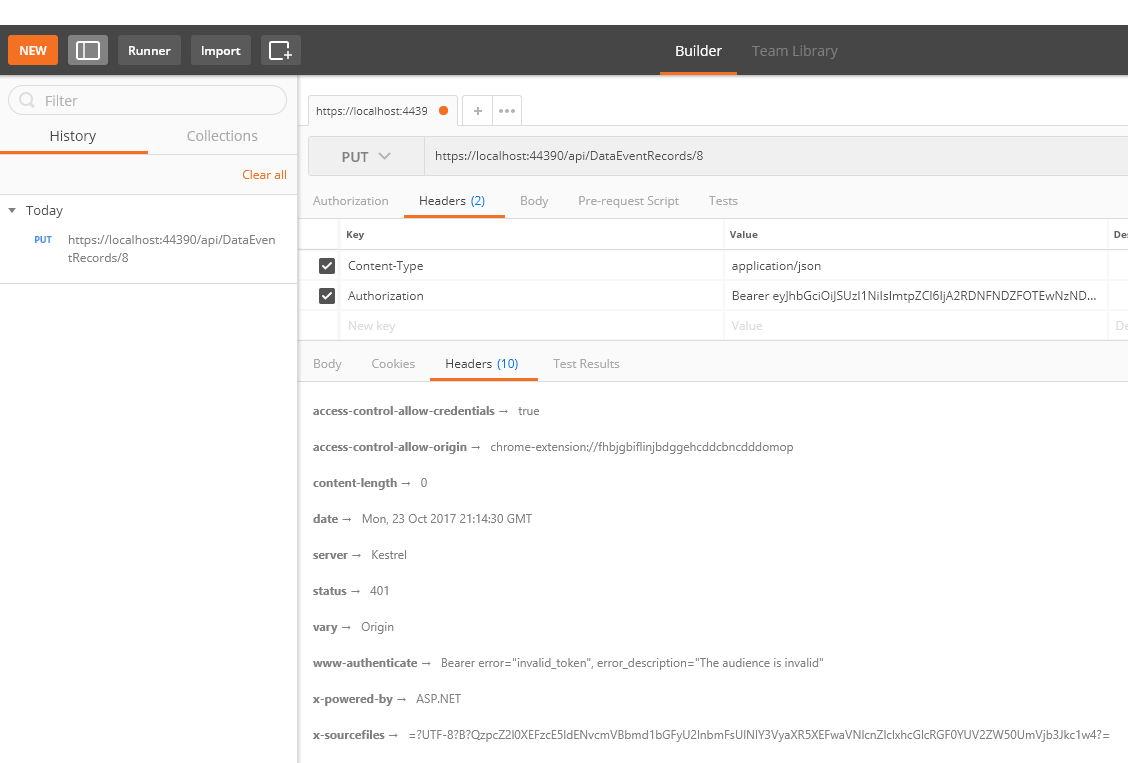
This article shows how to implement a custom ASP.NET Core policy using the AuthorizationHandler class. The handler validates, that the identity from the HttpContext has the authorization to update the object in the database. Code: https://github.com/damienbod/AspNetCoreAngularSignalRSecurity History 2023-01-08 Updated Angular 15, .NET 72021-01-25 Updated Angular 11.1.0 .NET 5, ngrx implementation2020-03-21 updated packages, fixed Admin UI […]
Securing an Angular SignalR client using JWT tokens with ASP.NET Core and Duende IdentityServer
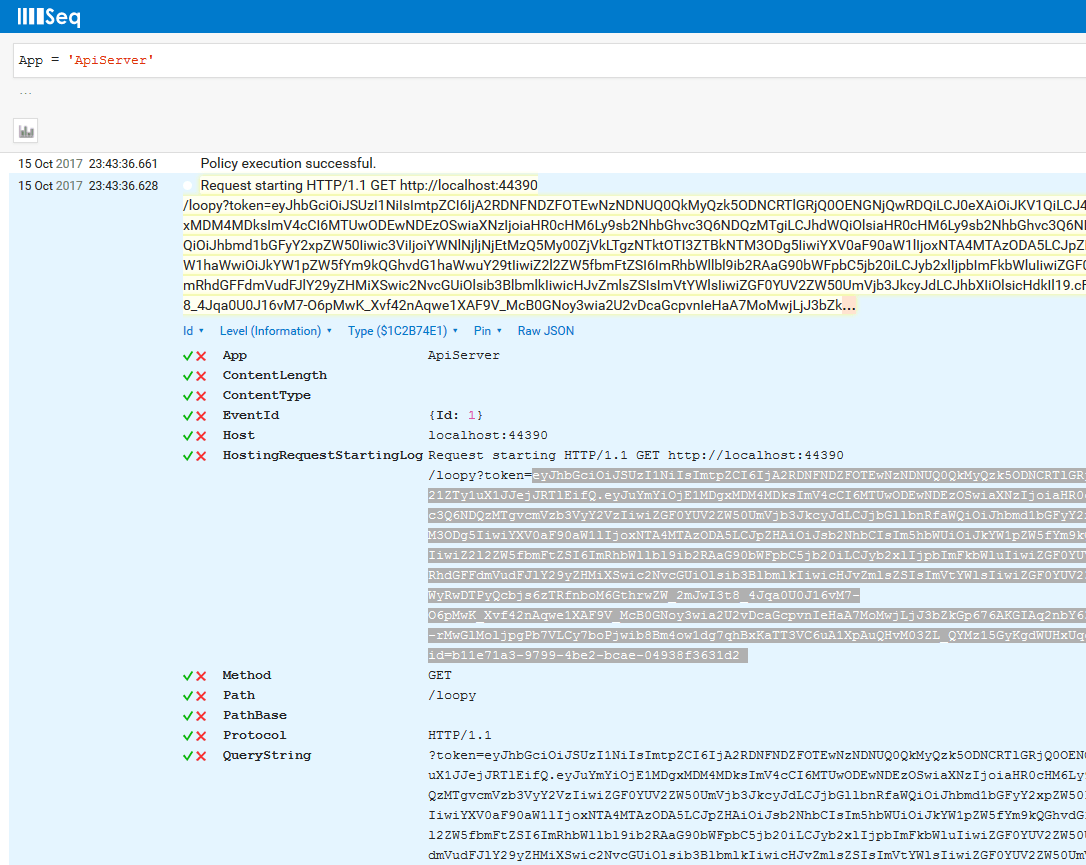
This post shows how an Angular SignalR client can send secure messages using JWT bearer tokens with an API and an STS server. The STS server is implemented using Duende IdentityServer and the API is implemented using ASP.NET Core. Code: https://github.com/damienbod/AspNetCoreAngularSignalRSecurity Posts in this series History 2023-01-08 Updated Angular 15, .NET 72021-01-25 Updated Angular 11.1.0 […]

 Software Engineering