Tag Archives: ASP.NET Core
Using an EF Core database for the IdentityServer4 configuration data
This article shows how to implement a database store for the IdentityServer4 configurations for the Client, ApiResource and IdentityResource settings using Entity Framework Core and SQLite. This could be used, if you need to create clients, or resources dynamically for the STS, or if you need to deploy the STS to multiple instances, for example […]

Sending Direct Messages using SignalR with ASP.NET Core and Angular
This article shows how SignalR could be used to send direct messages between different clients using ASP.NET Core to host the SignalR Hub and Angular to implement the clients. Code: https://github.com/damienbod/AspNetCoreAngularSignalRSecurity Posts in this series History 2023-01-08 Updated Angular 15, .NET 72021-01-25 Updated Angular 11.1.0 .NET 5, ngrx implementation2020-03-21 updated packages, fixed Admin UI STS2019-08-18 […]
Securing an Angular SignalR client using JWT tokens with ASP.NET Core and Duende IdentityServer
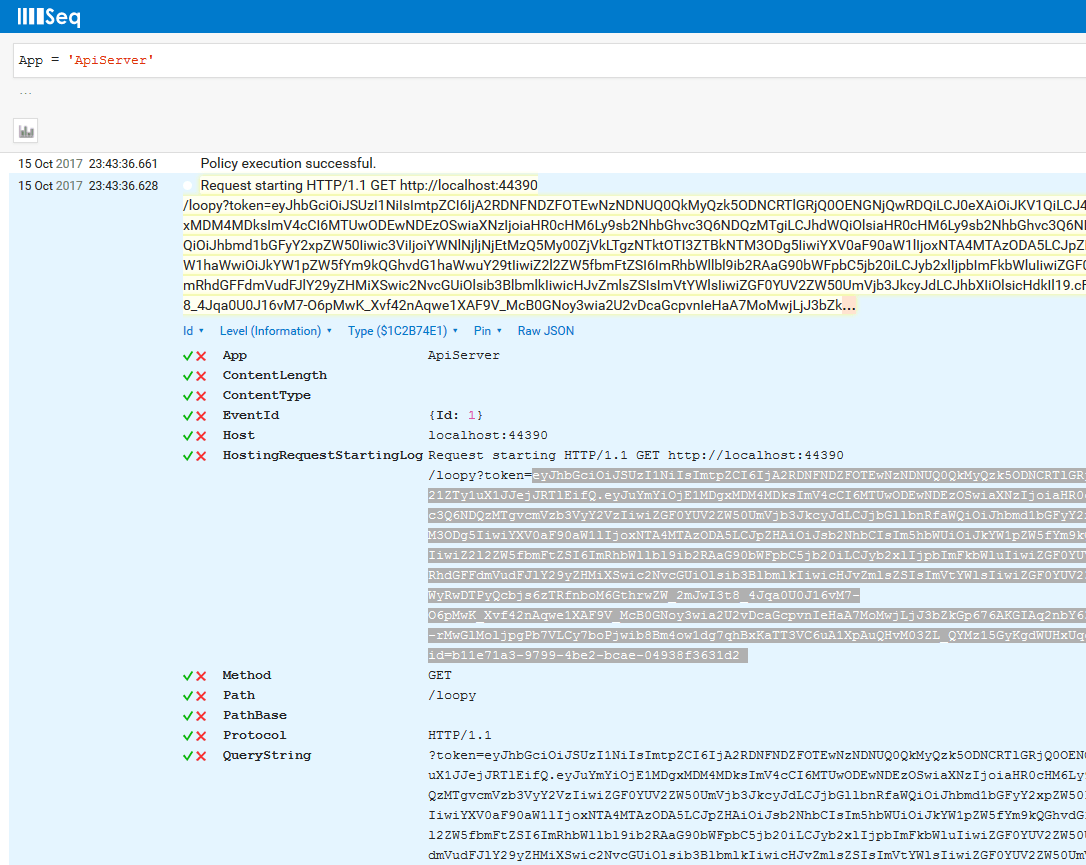
This post shows how an Angular SignalR client can send secure messages using JWT bearer tokens with an API and an STS server. The STS server is implemented using Duende IdentityServer and the API is implemented using ASP.NET Core. Code: https://github.com/damienbod/AspNetCoreAngularSignalRSecurity Posts in this series History 2023-01-08 Updated Angular 15, .NET 72021-01-25 Updated Angular 11.1.0 […]
Using EF Core and SQLite to persist SignalR Group messages in ASP.NET Core
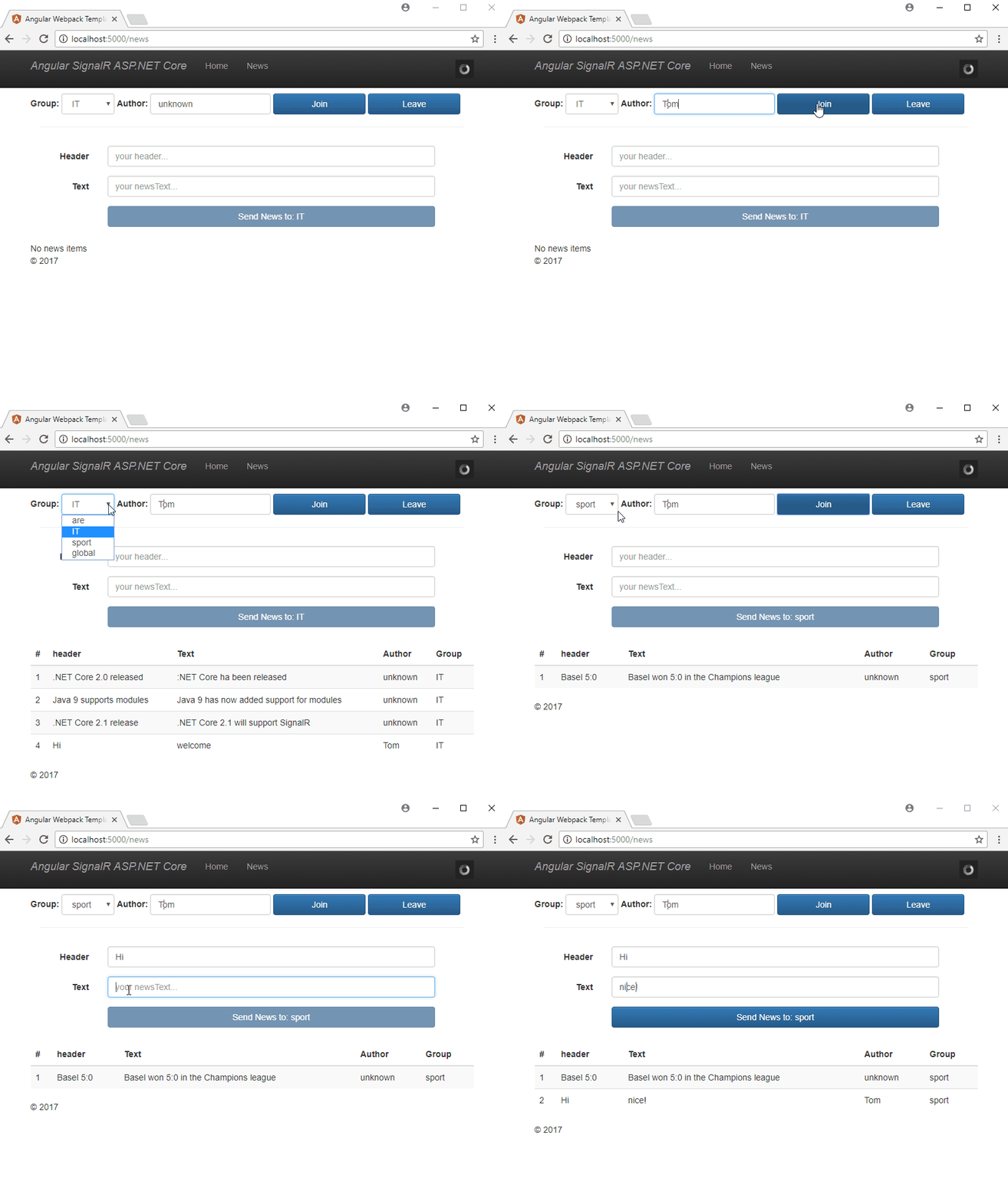
The article shows how SignalR messages can be saved to a database using EF Core and SQLite. The post uses the SignalR Hub created in this blog; SignalR Group messages with ngrx and Angular, and extends it so that users can only join an existing SignalR group. The group history is then sent to the […]
Angular Configuration using ASP.NET Core settings
This post shows how ASP.NET Core application settings can be used to configure an Angular application. ASP.NET Core provides excellent support for different configuration per environment, and so using this for an Angular application can be very useful. Using CI, one release build can be automatically created with different configurations, instead of different release builds […]
Implementing Two-factor authentication with IdentityServer4 and Twilio
This article shows how to implement two factor authentication using Twilio and IdentityServer4 using Identity. On the Microsoft’s Two-factor authentication with SMS documentation, Twilio and ASPSMS are promoted, but any SMS provider can be used. Code: https://github.com/damienbod/AspNetCoreID4External 2017-09-23 Updated to ASP.NET Core 2.0 Setting up Twilio Create an account and login to https://www.twilio.com/ Now create […]
Adding an external Microsoft login to IdentityServer4
This article shows how to implement a Microsoft Account as an external provider in an IdentityServer4 project using ASP.NET Core Identity with a SQLite database. Code https://github.com/damienbod/AspNetCoreID4External Updated: You can also login using OpenID Connect instead of using Microsoft Account. Updating Microsoft Account Logins in ASP.NET Core with OpenID Connect and Azure Active Directory 2019-05-17 […]
Using Protobuf Media Formatters with ASP.NET Core
This article shows how to use Protobuf with an ASP.NET Core MVC application. The API uses the WebApiContrib.Core.Formatter.Protobuf Nuget package to add support for Protobuf. This package uses the protobuf-net Nuget package from Marc Gravell, which makes it really easy to use a really fast serializer, deserializer for your APIs. Code: https://github.com/damienbod/AspNetCoreWebApiContribProtobufSample History 2019-09-23 Updated […]
Implementing a silent token renew in Angular for the OpenID Connect Implicit flow
This article shows how to implement a silent token renew in Angular using IdentityServer4 as the security token service server. The SPA Angular client implements the OpenID Connect Implicit Flow ‘id_token token’. When the id_token expires, the client requests new tokens from the server, so that the user does not need to authorise again. Code: […]
Using Angular in an ASP.NET Core View with Webpack
This article shows how Angular can be run inside an ASP.NET Core MVC view using Webpack to build the Angular application. By using Webpack, the Angular application can be built using the AOT and Angular lazy loading features and also profit from the advantages of using a server side rendered view. If you prefer to […]

 Software Engineering