Category javascript
Using EF Core and SQLite to persist SignalR Group messages in ASP.NET Core
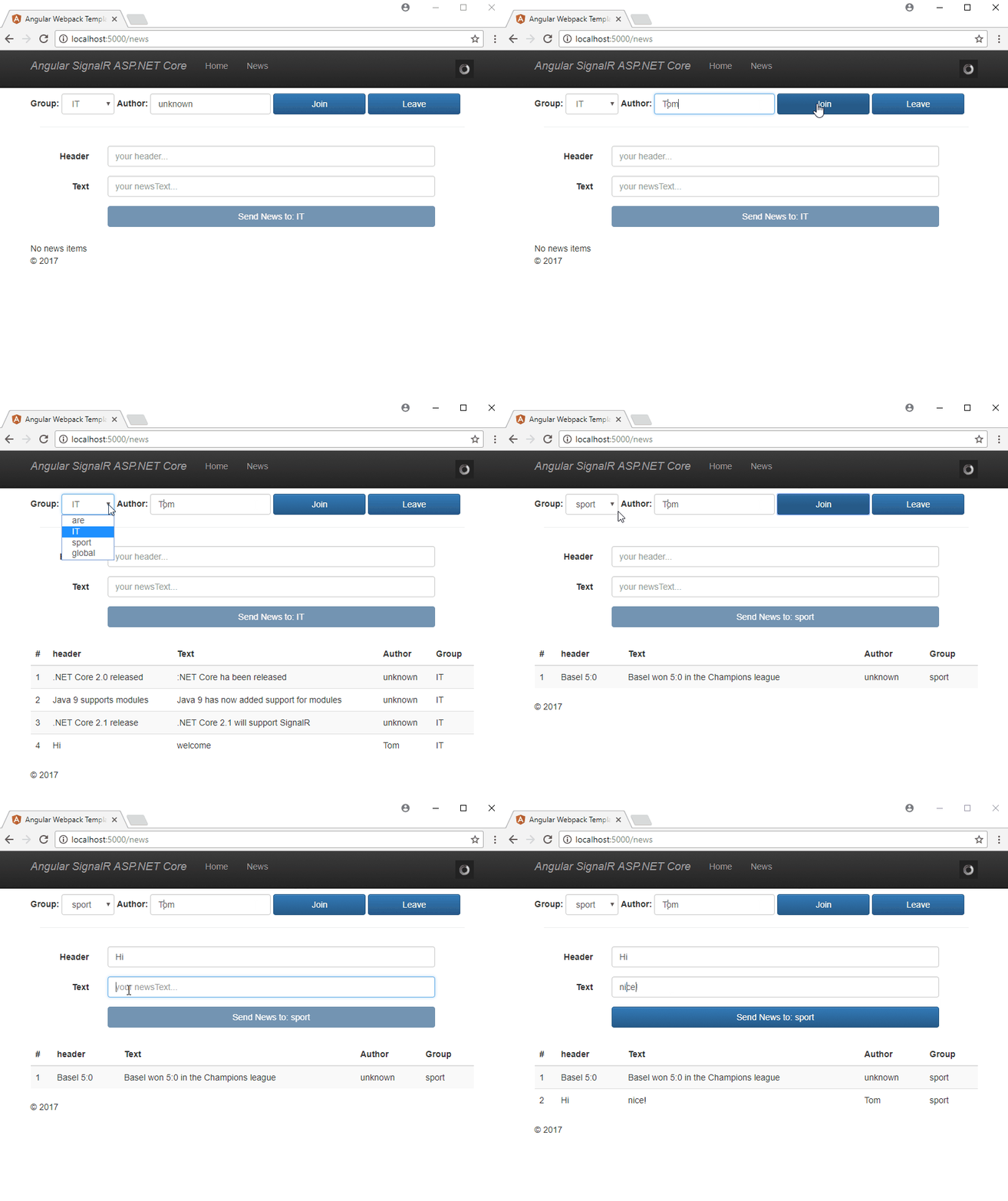
The article shows how SignalR messages can be saved to a database using EF Core and SQLite. The post uses the SignalR Hub created in this blog; SignalR Group messages with ngrx and Angular, and extends it so that users can only join an existing SignalR group. The group history is then sent to the […]
Auto redirect to an STS server in an Angular app using oidc Implicit Flow
This article shows how to implement an auto redirect in an Angular application, if using the OIDC Implicit Flow with an STS server. When a user opens the application, it is sometimes required that the user is automatically redirected to the login page on the STS server. This can be tricky to implement, as you […]
Getting started with SignalR using ASP.NET Core and Angular
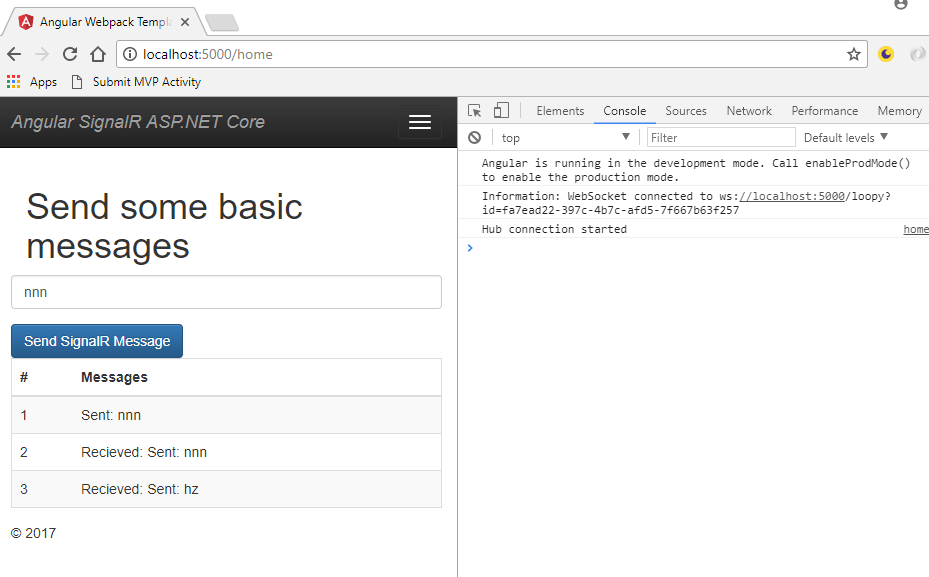
This article shows how to setup a first SignalR Hub in ASP.NET Core 2.2 and use it with an Angular client. SignalR was released with dotnet 2.1. Thanks to Dennis Alberti for his help in setting up the code example. Code: https://github.com/damienbod/AspNetCoreAngularSignalR Posts in this series History 2023-01-08 Updated Angular 15, .NET 72021-01-25 Updated Angular […]
Getting started with Angular and Ngrx
This article shows how you could setup Redux in an Angular application using ngrx. Redux provides a really great way of managing state in an Angular application. State Management is hard, and usually ends up a mess when you invent it yourself. At present, Angular provides no recommendations or solution for this. Thanks to Fabian […]
Angular Configuration using ASP.NET Core settings
This post shows how ASP.NET Core application settings can be used to configure an Angular application. ASP.NET Core provides excellent support for different configuration per environment, and so using this for an Angular application can be very useful. Using CI, one release build can be automatically created with different configurations, instead of different release builds […]
Adding an external Microsoft login to IdentityServer4
This article shows how to implement a Microsoft Account as an external provider in an IdentityServer4 project using ASP.NET Core Identity with a SQLite database. Code https://github.com/damienbod/AspNetCoreID4External Updated: You can also login using OpenID Connect instead of using Microsoft Account. Updating Microsoft Account Logins in ASP.NET Core with OpenID Connect and Azure Active Directory 2019-05-17 […]
Angular OIDC OAuth2 client with Google Identity Platform
This article shows how an Angular client could implement a login for a SPA application using Google Identity Platform OpenID. The Angular application uses the npm package angular-auth-oidc-client to implement the OpenID Connect Implicit Flow to connect with the google identity platform. Code: https://github.com/damienbod/angular-auth-oidc-sample-google-openid History 2020-05-03 Updated to OIDC lib version 11.0.0, Angular 9.1.4, ASP.NET […]
angular-auth-oidc-client Release, an OpenID Implicit Flow client in Angular
I have been blogging and writing code for Angular and OpenID Connect since Nov 1, 2015. Now after all this time, I have decided to create my first npm package for Angular: angular-auth-oidc-client, which makes it easier to use the Angular Auth OpenID client. This is now available on npm. npm package: https://www.npmjs.com/package/angular-auth-oidc-client github code: […]
OpenID Connect Session Management using an Angular application and IdentityServer4
The article shows how the OpenID Connect Session Management can be implemented in an Angular application. The OpenID Connect Session Management 1.0 provides a way of monitoring the user session on the server using iframes. IdentityServer4 implements the server side of the specification. This does not monitor the lifecycle of the tokens used in the […]
Implementing a silent token renew in Angular for the OpenID Connect Implicit flow
This article shows how to implement a silent token renew in Angular using IdentityServer4 as the security token service server. The SPA Angular client implements the OpenID Connect Implicit Flow ‘id_token token’. When the id_token expires, the client requests new tokens from the server, so that the user does not need to authorise again. Code: […]

 Software Engineering