Tag Archives: Microsoft
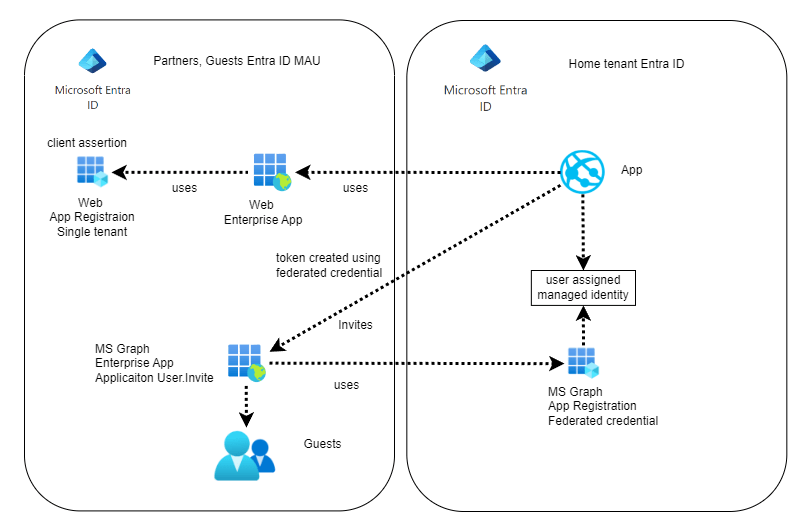
Invite Guest users in a Entra ID Multi-tenant setup
This post looks at implementing a guest user invite in a cross tenant setup. This is useful when creating partner tenants using an Entra ID MAU license for all partner guests and members. This makes it possible to keep the home tenant separated for internal members. Setup The Partners or guest Entra ID tenant is […]

Reset Cookies and force new sign-in using ASP.NET Core Identity
This post looks at implementing a cookie reset in an ASP.NET Core application using Duende identity server which federates to Entra ID. Sometimes cookies need to be reset for end users due to size problems, or unknown remote authentication server errors. The cookies can be cleared and a new sign in can be forced. Code: […]

Handling OpenID Connect error events in ASP.NET Core
ASP.NET Core provides great extension points for handling OpenID Connect error events. This blog looks at implementing error handling in an ASP.NET Core application implemented using ASP.NET Core Identity. Code: https://github.com/damienbod/IdentityExternalErrorHandling Setup The application uses OpenID Connect to implement the authentication of the user identities. This implements a standard OpenID Connect flow and uses Microsoft […]
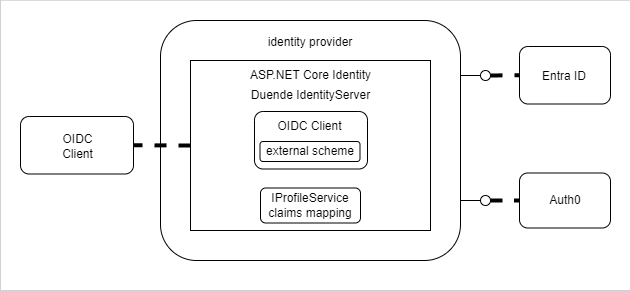
Using multiple external identity providers from ASP.NET Core Identity and Duende IdentityServer
This blog post shows how an ASP.NET Core Identity application can integrate and implement multiple external identity providers. An OIDC client UI uses the solution and is implemented using Duende IdentityServer. The same scheme is used for all the external providers and mapped to the identity for the client UI and the application. Using OpenID […]

ASP.NET Core delegated Microsoft OBO access token management (Entra only)
This blog shows how to implement a delegated Microsoft On-Behalf-Of flow in ASP.NET Core, and has a focus on access token management. The solution uses Microsoft.Identity.Web to implement the different flows and it really simple to implement, when you know how to use the Nuget package and use the correct Microsoft documentation. The application can […]

Use client assertions in OpenID Connect and ASP.NET Core
Client assertions is a method of client authentication which can be used in OpenID Connect. This provides an alternative to client secrets. This approach enhances security by using signed tokens (JWTs) to authenticate clients during the token request process or the OAuth PAR request. In ASP.NET Core, client assertions is not supported per default, a […]

Using Entra External ID with an Auth0 OpenID Connect identity provider
This post looks at implementing an Open ID Connect identity provider in Microsoft Entra External ID. Auth0 is used as the identity provider and an ASP.NET Core application is used to test the authentication. Microsoft Entra External ID federates to Auth0. Client code: https://github.com/damienbod/EntraExternalIdCiam Microsoft Entra External ID supports federation using OpenID Connect and was […]
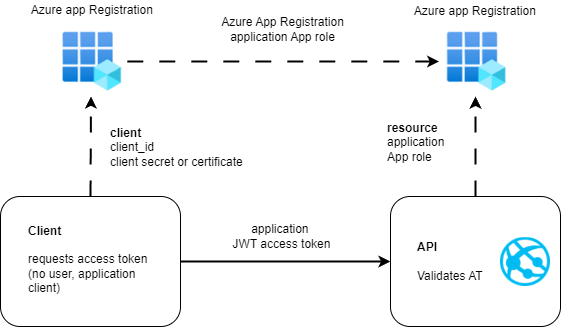
Microsoft Entra ID App-to-App security architecture
This article looks at the different setups when using App-to-App security with Microsoft Entra ID (OAuth client credentials). Microsoft Entra App registrations are used to configure the OAuth clients and resources. For each tenant, an Enterprise application is created for the client App registration when the consent is granted. The claims in the access token […]

Implement a Microsoft Entra ID external authentication method using ASP.NET Core and OpenIddict
The article shows how to implement a Microsoft Entra ID external authentication method (EAM) using ASP.NET Core, OpenIddict and FIDO2/passkeys. The application using ASP.NET Core Identity to manage the accounts and the passkeys. Code: https://github.com/damienbod/MfaServer The following flow diagram from the Microsoft docs explains how EAM works. Refer to the documentation for a full explanation. […]
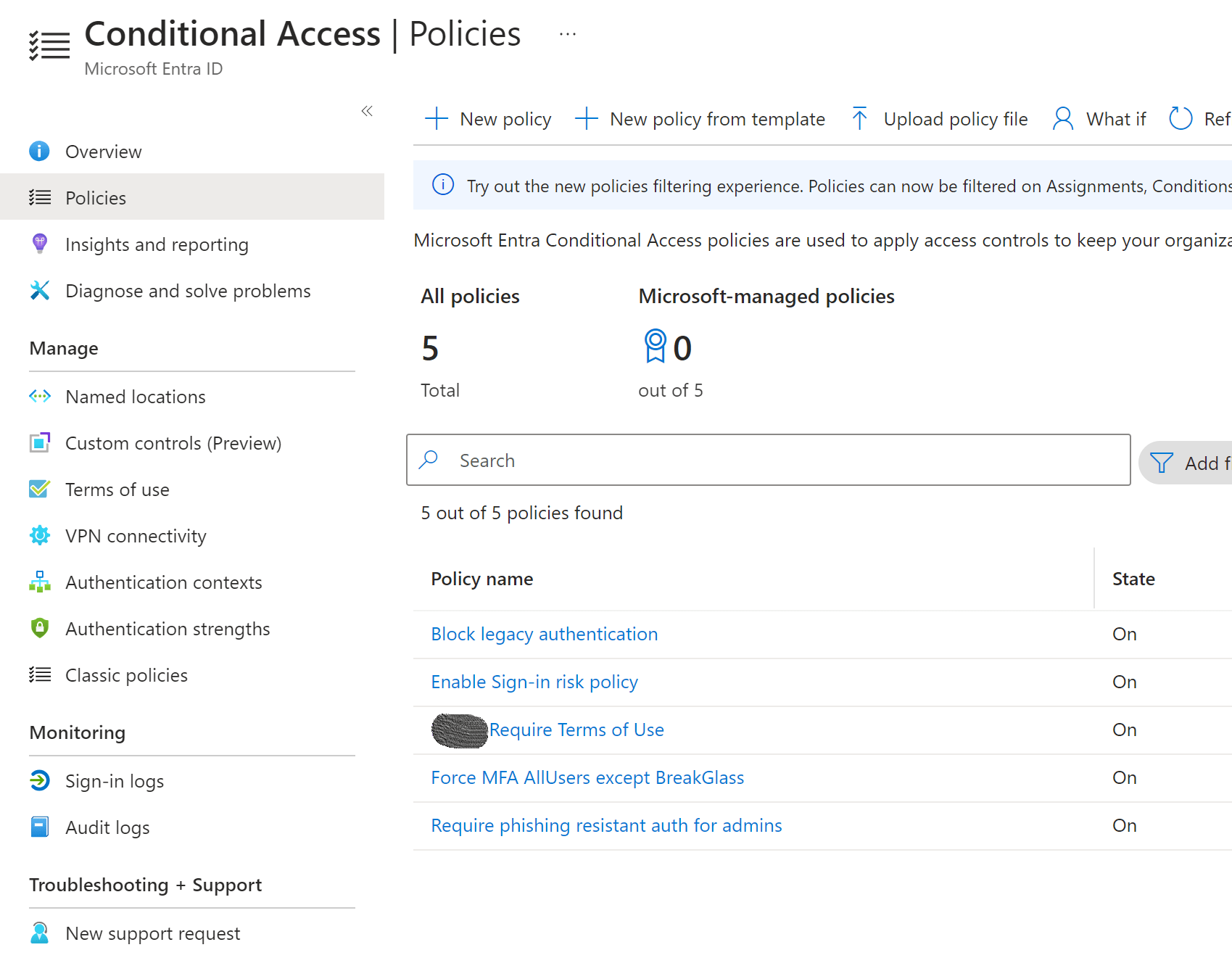
Create conditional access base policies for a Microsoft Entra ID tenant
This article shows some of the base conditional access policies which can be implemented for all Microsoft Entra ID tenants. Phishing resistant authentication should be required for all administration flows and some other user policies like sign-in risk MFA or terms of conditions. I recommend these base policies when implementing an Microsoft Entra ID tenant […]

 Software Engineering