Tag Archives: Azure
Invite Guest users in a Entra ID Multi-tenant setup
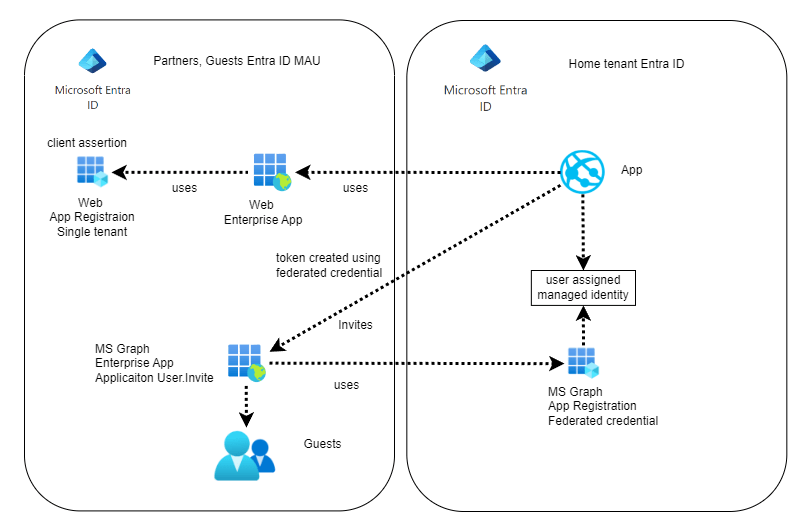
This post looks at implementing a guest user invite in a cross tenant setup. This is useful when creating partner tenants using an Entra ID MAU license for all partner guests and members. This makes it possible to keep the home tenant separated for internal members. Setup The Partners or guest Entra ID tenant is […]

Implement a secure MCP OAuth desktop client using OAuth and Entra ID
The article demonstrates how to implement a secure MCP OAuth desktop client using Microsoft Entra ID. The MCP server is built with ASP.NET Core and secured using Microsoft Entra ID. The MCP client is a .NET console application that must acquire an OAuth access token to interact with the MCP server. Code: https://github.com/damienbod/McpSecurity Setup A […]
Implement a secure MCP server using OAuth and Entra ID
The article shows how to implement a secure model context protocol (MCP) server using OAuth and Entra ID. The MCP server is implemented using ASP.NET Core and uses Microsoft Entra ID to secure the API. An ASP.NET Core application using Azure OpenAI and semantic kernel is used to implement the MCP client for the agent […]

Reset Cookies and force new sign-in using ASP.NET Core Identity
This post looks at implementing a cookie reset in an ASP.NET Core application using Duende identity server which federates to Entra ID. Sometimes cookies need to be reset for end users due to size problems, or unknown remote authentication server errors. The cookies can be cleared and a new sign in can be forced. Code: […]

Issue and verify credentials using the Swiss Digital identity public beta, ASP.NET Core and .NET Aspire
This post shows how to issue and verify identities (verifiable credentials) using the Swiss Digital identity and trust infrastructure, (swiyu), ASP.NET Core and .NET Aspire. The swiyu infrastructure is implemented using the provided generic containers which implement the OpenID for Verifiable Credential Issuance and the OpenID for Verifiable Presentations standards as well as many other […]

Experimental alternative flow for OAuth First-Party Applications
This post looks at an alternative way of implementing a native app authentication and authorization. At present, a web browser is used to implement authentication of native applications when using OAuth and OpenID Connect. The alternative approach implemented in the post is based on the OAuth 2.0 for First-Party Applications draft and adapted to be […]

Handling OpenID Connect error events in ASP.NET Core
ASP.NET Core provides great extension points for handling OpenID Connect error events. This blog looks at implementing error handling in an ASP.NET Core application implemented using ASP.NET Core Identity. Code: https://github.com/damienbod/IdentityExternalErrorHandling Setup The application uses OpenID Connect to implement the authentication of the user identities. This implements a standard OpenID Connect flow and uses Microsoft […]
Using multiple external identity providers from ASP.NET Core Identity and Duende IdentityServer
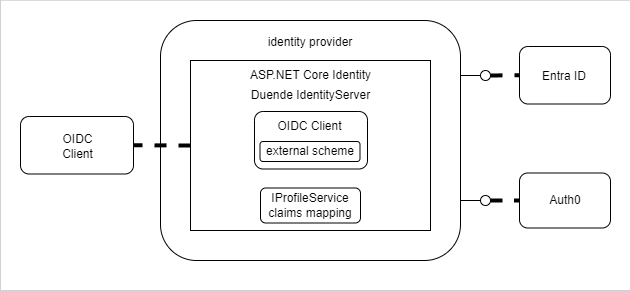
This blog post shows how an ASP.NET Core Identity application can integrate and implement multiple external identity providers. An OIDC client UI uses the solution and is implemented using Duende IdentityServer. The same scheme is used for all the external providers and mapped to the identity for the client UI and the application. Using OpenID […]

Implement client assertions with client credentials flow using OAuth DPoP
This blog looks at implementing client assertions for the client credentials flow using OAuth 2.0 Demonstration of Proof-of-Possession (DPoP). The client credentials flow is an OAuth 2.0 authorization grant type used for machine-to-machine authentication. DPoP further strengthens the security by ensuring that the client possesses a specific key at the time of the request, forcing […]

ASP.NET Core delegated Microsoft OBO access token management (Entra only)
This blog shows how to implement a delegated Microsoft On-Behalf-Of flow in ASP.NET Core, and has a focus on access token management. The solution uses Microsoft.Identity.Web to implement the different flows and it really simple to implement, when you know how to use the Nuget package and use the correct Microsoft documentation. The application can […]

 Software Engineering