Tag Archives: aspnetcore

Use swiyu, the Swiss E-ID to authenticate users with Duende and .NET Aspire
This post shows how to authenticate users using Duende IdentityServer and ASP.NET Core Identity which verifies identities (verifiable digital credentials) using the Swiss Digital identity and trust infrastructure (swiyu). The swiyu infrastructure is implemented using the provided generic containers which implement the OpenID for Verifiable Presentations standards as well as many other standards for implementing […]
Use EdDSA signatures to validate tokens in ASP.NET Core using OpenID Connect
Some identity providers use the EdDSA / ED25519 algorithm to sign and issue tokens. This post shows how to validate the tokens using the Nuget package from ScottBrady and ASP.NET Core. Using the default OpenID Connect setup, the keys are not read and the tokens cannot be validated. The error message could return something like […]

Issue and verify credentials using the Swiss Digital identity public beta, ASP.NET Core and .NET Aspire
This post shows how to issue and verify identities (verifiable credentials) using the Swiss Digital identity and trust infrastructure, (swiyu), ASP.NET Core and .NET Aspire. The swiyu infrastructure is implemented using the provided generic containers which implement the OpenID for Verifiable Credential Issuance and the OpenID for Verifiable Presentations standards as well as many other […]
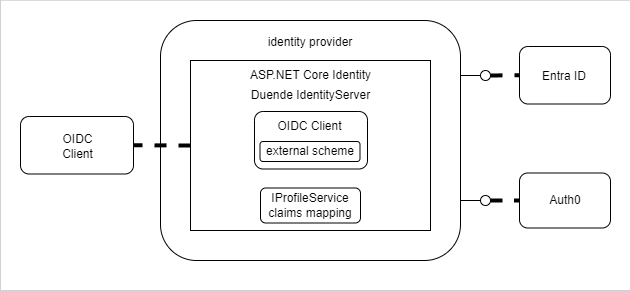
Using multiple external identity providers from ASP.NET Core Identity and Duende IdentityServer
This blog post shows how an ASP.NET Core Identity application can integrate and implement multiple external identity providers. An OIDC client UI uses the solution and is implemented using Duende IdentityServer. The same scheme is used for all the external providers and mapped to the identity for the client UI and the application. Using OpenID […]

Implement client assertions for OAuth client credential flows in ASP.NET Core
This blog implements client assertions using an OAuth client credential flow in ASP.NET Core. Client assertions provide a secure way for client authentication without sharing a secret, enhancing the security the OAuth client credentials flow. By using JSON Web Tokens (JWTs) client assertions, this approach ensures strong client identity (application) verification and mitigates risks associated […]

Implement Phone verification, 2FA using ASP.NET Core Identity
This post shows how to implement phone (SMS) verification and two-factor authentication (2FA) using ASP.NET Core Identity. The solution integrates phone-based verification and 2FA mechanisms. The implementation uses ASP.NET Core Identity’s extensibility to incorporate SMS-based verification during user registration and login processes. SMS is no longer a recommended authentication method due to security risks but […]

Use client assertions in OpenID Connect and ASP.NET Core
Client assertions is a method of client authentication which can be used in OpenID Connect. This provides an alternative to client secrets. This approach enhances security by using signed tokens (JWTs) to authenticate clients during the token request process or the OAuth PAR request. In ASP.NET Core, client assertions is not supported per default, a […]
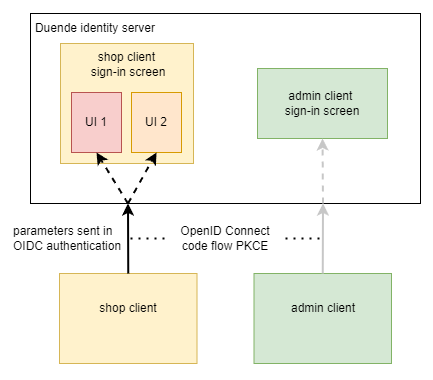
Customizing a single client sign-in using parameters in Duende IdentityServer
This post looks at customizing the sign-in UI and the sign-in options in an ASP.NET Core application using Duende IdentityServer and ASP.NET Core Identity. There are multiple ways of changing the look and feel of the UI for different OpenID Connect clients or different client flows. In the previous post, the UI was customized per […]

ASP.NET Core delegated OAuth Token Exchange access token management
This blog shows how to implement a delegated OAuth 2.0 Token Exchange RFC 8693 flow in ASP.NET Core, and has a focus on access token management. It looks at how the OAuth Token Exchange can be implemented and how an application can request delegated access tokens on behalf of a user and another application, providing […]

ASP.NET Core user delegated access token management
The article looks at managing user delegated access tokens for a downstream API in an ASP.NET Core web application. There are many ways of implementing this, all with advantages and disadvantages. The tokens are requested from an OpenID Connect server using the recommended standards. In this blog, the UI access token from the application authentication […]


