
ASP.NET Core provides great extension points for handling OpenID Connect error events. This blog looks at implementing error handling in an ASP.NET Core application implemented using ASP.NET Core Identity. Code: https://github.com/damienbod/IdentityExternalErrorHandling Setup The application uses OpenID Connect to implement the authentication of the user identities. This implements a standard OpenID Connect flow and uses Microsoft […]

This blog looks at implementing a strong Content Security Policy (CSP) in web applications implemented using Blazor and ASP.NET Core. When implementing CSP, I always recommend using a CSP nonce or at least CSP hashes. If a technical stack does not support CSP nonces, you should probably avoid using this solution when implementing secure and […]
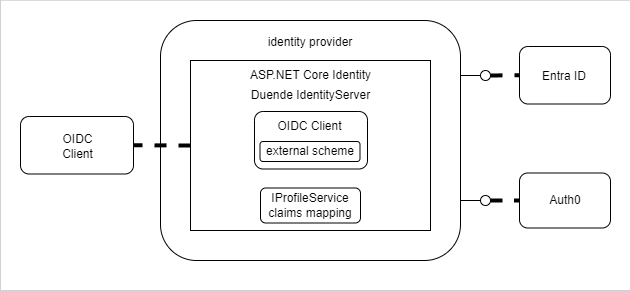
This blog post shows how an ASP.NET Core Identity application can integrate and implement multiple external identity providers. An OIDC client UI uses the solution and is implemented using Duende IdentityServer. The same scheme is used for all the external providers and mapped to the identity for the client UI and the application. Using OpenID […]

This blog looks at implementing client assertions for the client credentials flow using OAuth 2.0 Demonstration of Proof-of-Possession (DPoP). The client credentials flow is an OAuth 2.0 authorization grant type used for machine-to-machine authentication. DPoP further strengthens the security by ensuring that the client possesses a specific key at the time of the request, forcing […]

This blog implements client assertions using an OAuth client credential flow in ASP.NET Core. Client assertions provide a secure way for client authentication without sharing a secret, enhancing the security the OAuth client credentials flow. By using JSON Web Tokens (JWTs) client assertions, this approach ensures strong client identity (application) verification and mitigates risks associated […]

This blog shows how to implement a delegated Microsoft On-Behalf-Of flow in ASP.NET Core, and has a focus on access token management. The solution uses Microsoft.Identity.Web to implement the different flows and it really simple to implement, when you know how to use the Nuget package and use the correct Microsoft documentation. The application can […]

This post shows how to implement phone (SMS) verification and two-factor authentication (2FA) using ASP.NET Core Identity. The solution integrates phone-based verification and 2FA mechanisms. The implementation uses ASP.NET Core Identity’s extensibility to incorporate SMS-based verification during user registration and login processes. SMS is no longer a recommended authentication method due to security risks but […]

Client assertions is a method of client authentication which can be used in OpenID Connect. This provides an alternative to client secrets. This approach enhances security by using signed tokens (JWTs) to authenticate clients during the token request process or the OAuth PAR request. In ASP.NET Core, client assertions is not supported per default, a […]
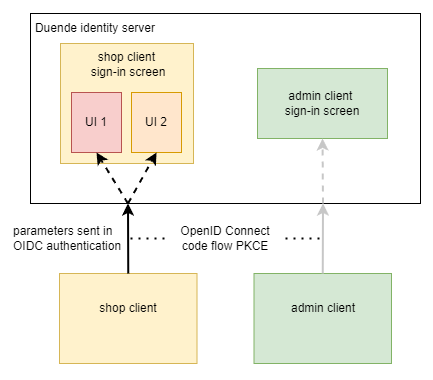
This post looks at customizing the sign-in UI and the sign-in options in an ASP.NET Core application using Duende IdentityServer and ASP.NET Core Identity. There are multiple ways of changing the look and feel of the UI for different OpenID Connect clients or different client flows. In the previous post, the UI was customized per […]

This blog shows how to implement a delegated OAuth 2.0 Token Exchange RFC 8693 flow in ASP.NET Core, and has a focus on access token management. It looks at how the OAuth Token Exchange can be implemented and how an application can request delegated access tokens on behalf of a user and another application, providing […]

 Software Engineering