Category Self Sovereign Identity
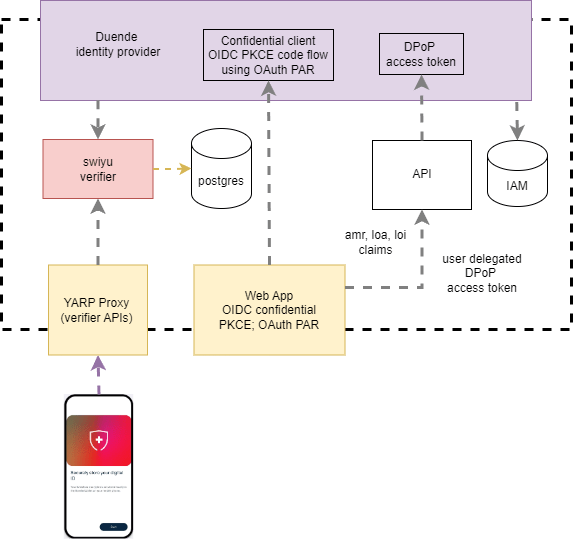
Add application security to the swiyu generic management verifier APIs using OAuth
The article looks at implementing security using OAuth for the swiyu Public Beta Trust Infrastructure generic containers. The container provides endpoint for OpenID verification and the management APIs. The OpenID endpoints are publicly accessible using a reverse proxy, the management APIs can only be accessed in the network and using an access token for app […]
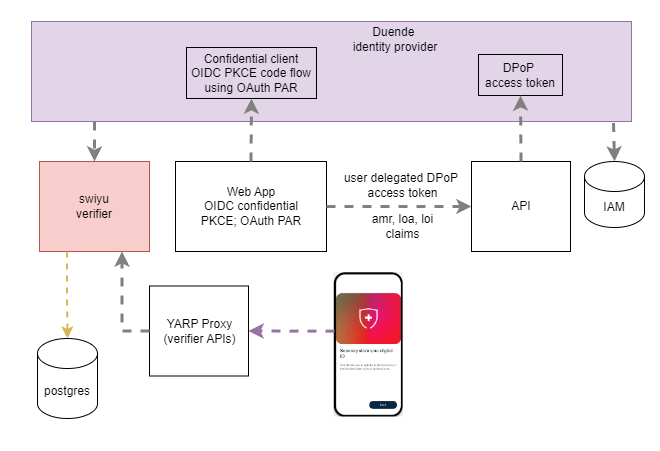
Isolate the swiyu Public Beta management APIs using YARP
This post looks at hardening the security for the swiyu public beta infrastructure. The generic containers provide both management APIs and wallet APIs which support the OpenID for Verifiable Presentations 1.0 specification. The management APIs require both network protection and application security. This post looks at implementing the network isolation. Code: https://github.com/swiss-ssi-group/swiyu-passkeys-idp-loi-loa Blogs in this […]
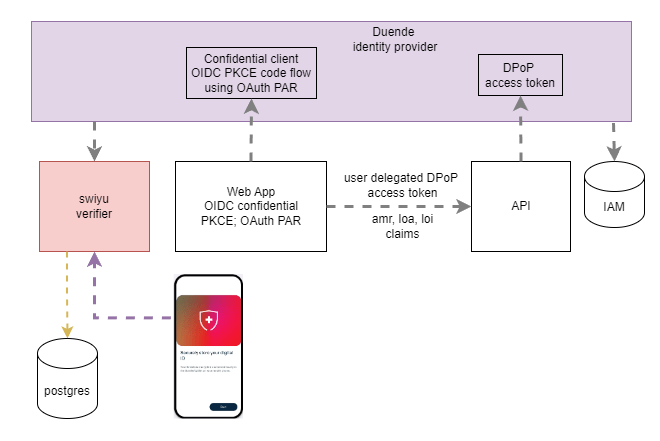
Implementing Level of Identification (LoI) with ASP.NET Core Identity and Duende
This article explores how to implement Level of Identification (LOI) in an ASP.NET Core application. The solution uses Duende IdentityServer as the OpenID Connect provider and ASP.NET Core Identity for user management. Identity verification is performed using the Swiyu Public Beta infrastructure. Any OpenID Connect client can consume the loi claim together with the loa […]
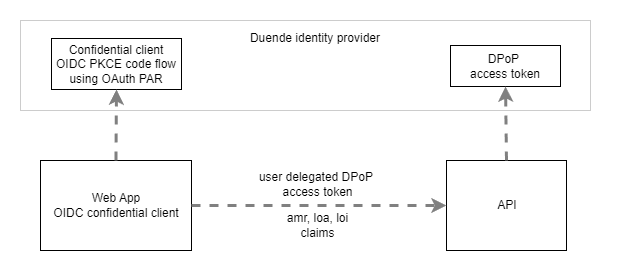
Implementing Level of Authentication (LoA) with ASP.NET Core Identity and Duende
This post shows how to implement an application which requires a user to authenticate using passkeys. The identity provider returns three claims to prove the authentication level (loa), the identity level, (loi) and the amr claim showing the used authentication method. Code: https://github.com/swiss-ssi-group/swiyu-passkeys-idp-loi-loa Blogs in this series: The amr claim and the loa claim returns […]

Digital Authentication and Identity validation
This post looks at authentication and identity validation and describes what should be validated and some of the concepts. With the increasing push to move processes to a digital world and the new threat models, authentication and identity validation MUST be implemented in a professional way. Using standards like OpenID Connect, OAuth and OpenID VCs […]

Implement forgot your password using swiyu, ASP.NET Core Identity and Aspire
This post show to implement a “Forgot your password” flow using the Swiss Digital identity and trust infrastructure, (swiyu) in an ASP.NET Core web application using ASP.NET Core Identity and Duende IdentityServer. The generic containers from swiyu are used to integrate the Swiss E-ID and the OpenID for Verifiable Presentations standards. .NET Aspire is used […]
Implement MFA using swiyu, the Swiss E-ID with Duende IdentityServer, ASP.NET Core Identity and .NET Aspire
The post shows how to use the Swiss Digital identity and trust infrastructure, (swiyu) as an MFA method in an ASP.NET Core web application using ASP.NET Core Identity and Duende IdentityServer. The generic containers from swiyu are used to integrate the Swiss E-ID and the OpenID for Verifiable Presentations standards. Code: https://github.com/swiss-ssi-group/swiyu-idp-mfa-aspire-aspnetcore Blogs in this […]
Use swiyu, the Swiss E-ID to authenticate users with Duende and .NET Aspire
This post shows how to authenticate users using Duende IdentityServer and ASP.NET Core Identity which verifies identities (verifiable digital credentials) using the Swiss Digital identity and trust infrastructure (swiyu). The swiyu infrastructure is implemented using the provided generic containers which implement the OpenID for Verifiable Presentations standards as well as many other standards for implementing […]

Issue and verify credentials using the Swiss Digital identity public beta, ASP.NET Core and .NET Aspire
This post shows how to issue and verify identities (verifiable credentials) using the Swiss Digital identity and trust infrastructure, (swiyu), ASP.NET Core and .NET Aspire. The swiyu infrastructure is implemented using the provided generic containers which implement the OpenID for Verifiable Credential Issuance and the OpenID for Verifiable Presentations standards as well as many other […]
Issue and verify BBS+ verifiable credentials using ASP.NET Core and trinsic.id
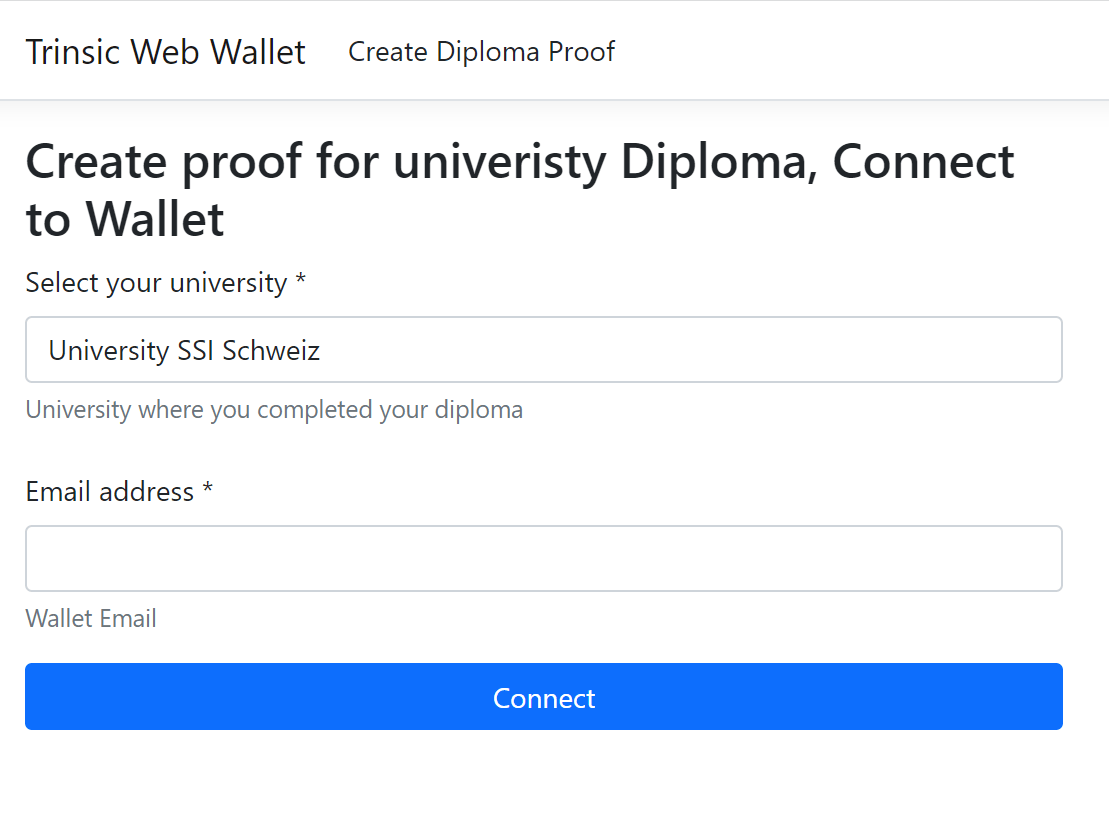
This article shows how to implement identity verification in a solution using ASP.NET Core and trinsic.id, built using an id-tech solution based on self sovereign identity principals. The credential issuer uses OpenID Connect to authenticate, implemented using Microsoft Entra ID. The edge or web wallet authenticates using trinsic.id based on a single factor email code. […]

 Software Engineering